Journal · Snow · Guide
How to Choose a Ski Base Layer
The layer no one sees decides how the whole day feels. What to look for in fabric, fit and weight, and why the sun matters more on the mountain than on the beach.
Ask anyone who skis often what makes a good day on the mountain and they rarely mention their jacket. They talk about being warm on the chairlift, dry on the way down and comfortable at lunch. All three come down to the layer that sits against the skin.
What a base layer does
A base layer has one job before any other: to move moisture away from your skin. Skiing is hard work in cold air. You warm up on the descent and cool down on the lift, and any sweat left on the skin turns cold the moment you stop. A good base layer keeps that cycle comfortable, holding a fine layer of warmth close to the body while letting moisture escape.
Choose the fabric first
There are two good choices, and one to leave at home.
- Merino wool is soft, warm and naturally resists odour, but it is slower to dry and can lose its shape over a long season.
- Fine technical knits of polyamide and elastane dry quickly, hold their shape and move with you. The best feel closer to silk than to sportswear.
- Cotton holds moisture against the skin and stays cold and damp all day.


Close, never tight
A base layer only works when it touches the skin, so it should be cut close, like a second skin, with no loose folds to trap damp air. Close is not the same as tight. You should be able to bend, crouch and reach for a pole without anything pulling, rolling at the waist or riding up under your snow suit.
Close to the skin, smooth under everything, and forgotten by the second run.
One piece or two
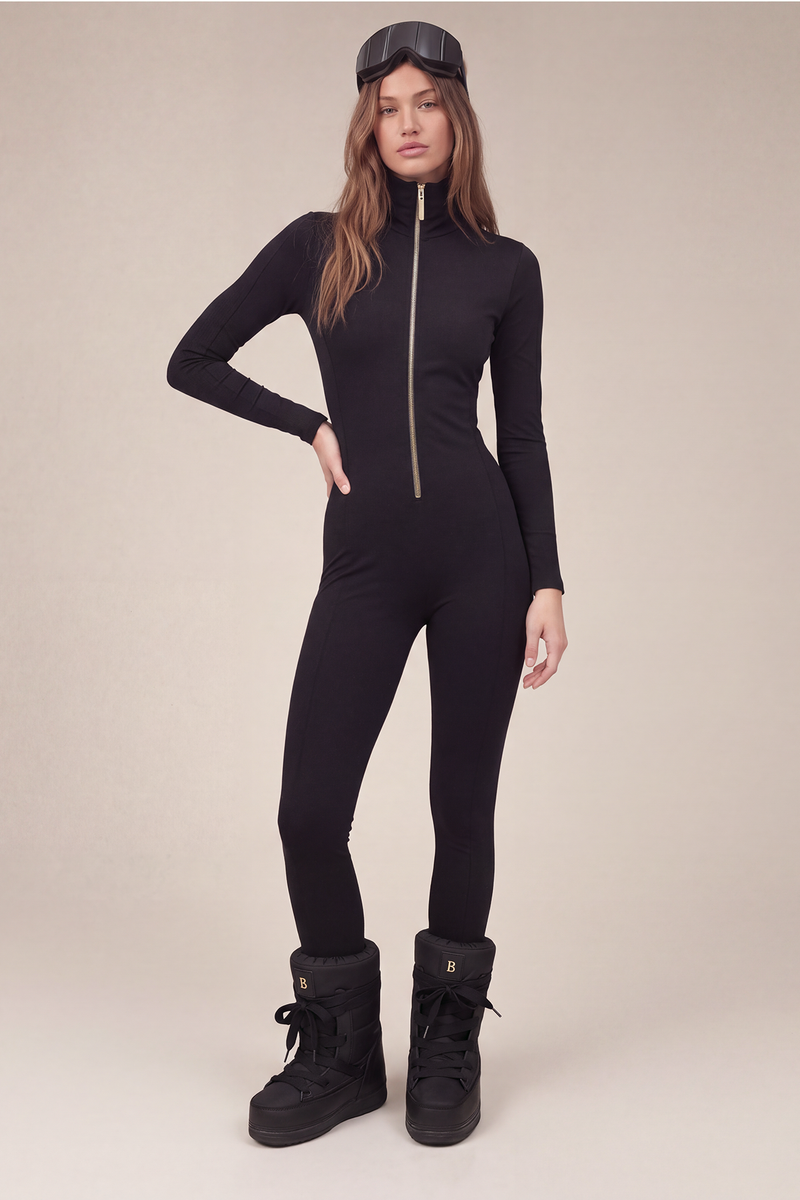
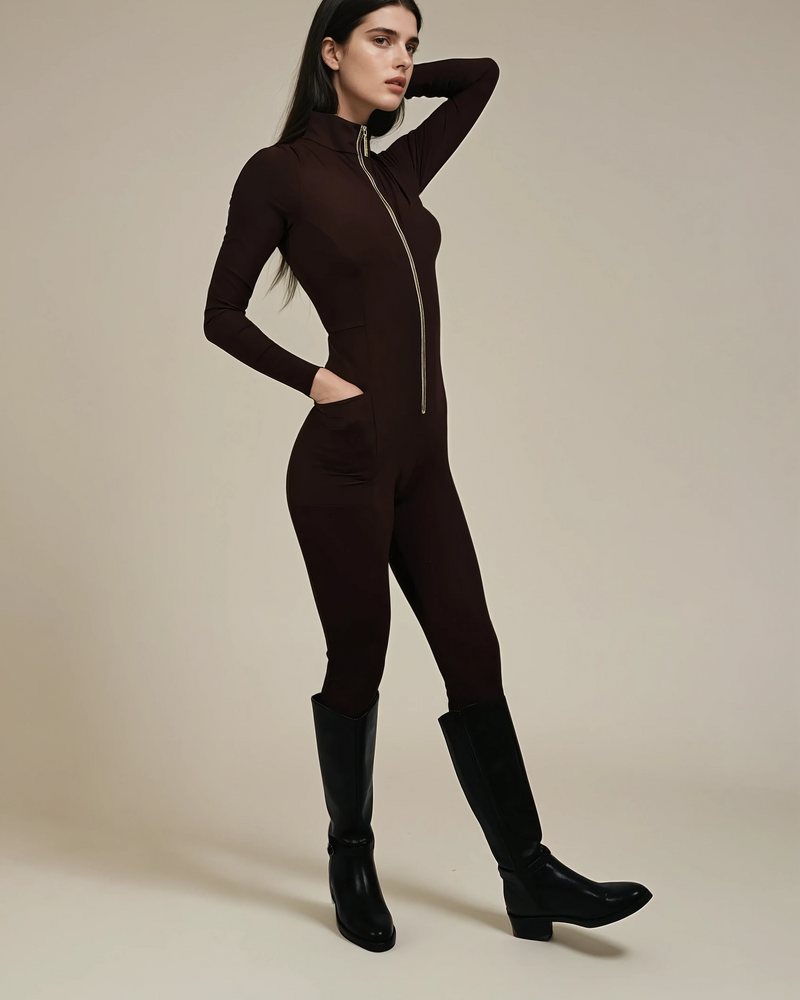
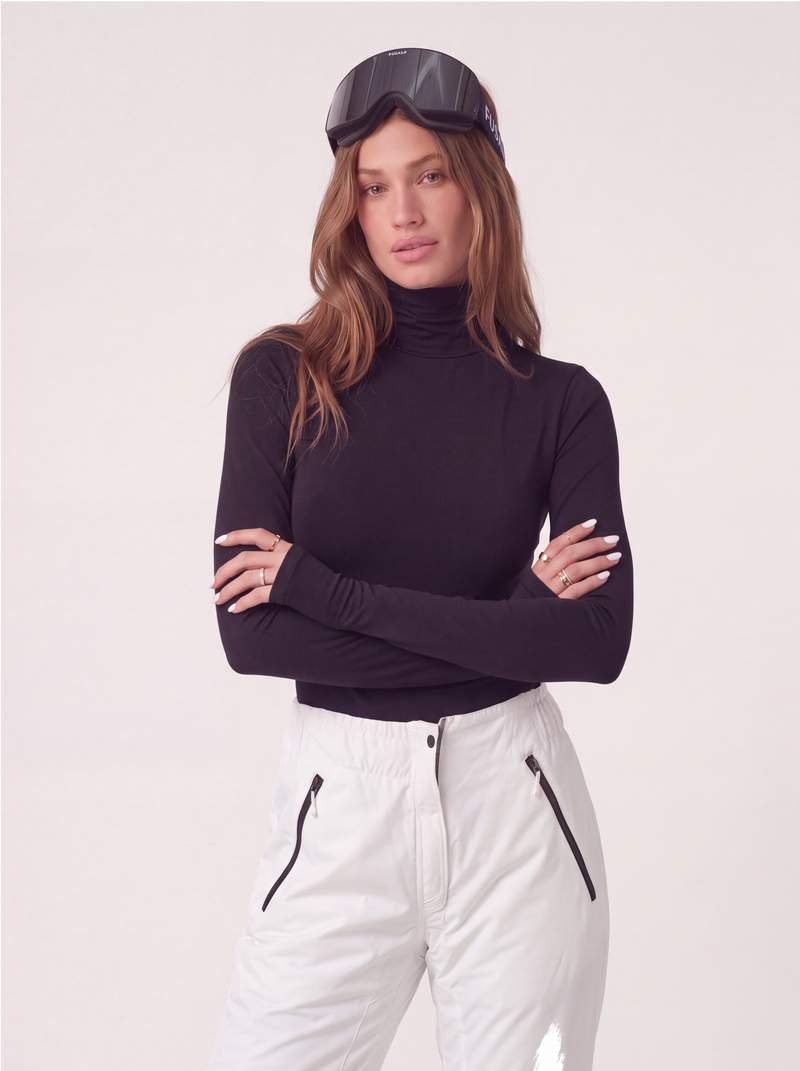
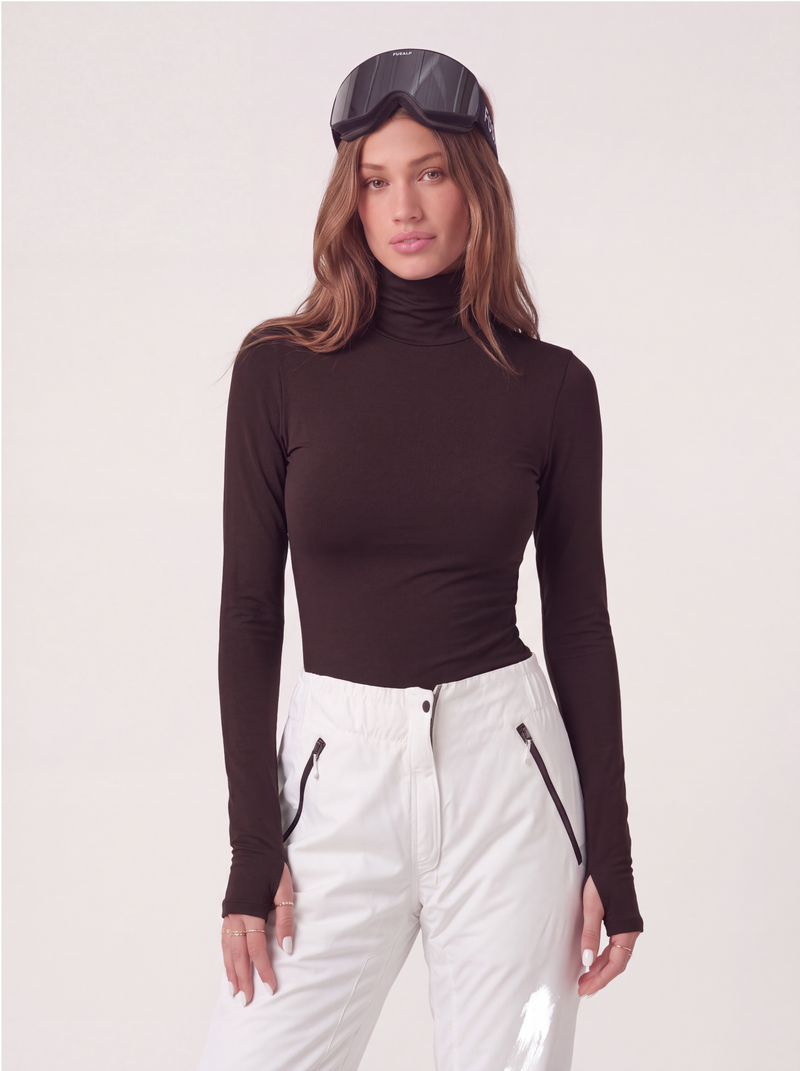
Separates are easy to mix, but they come apart. A top rides up, leggings roll down, and a cold band of skin appears exactly where the wind finds it. A one-piece base layer jumpsuit stays put from neck to ankle all day. A bodysuit does the same for the upper body, fastening underneath so it stays tucked in beneath a snow suit or salopettes.

Weight and warmth
A light, fine base layer suits spring skiing, sunny days and anyone who runs warm. In the coldest weeks of January and February, add a mid-layer over it rather than reaching for a thicker base. Fine layers are also the ones you can keep on off the mountain, under knitwear by the fire or with jeans on a cold evening in town.

The sun at altitude
The sun is stronger on the mountain than most people expect.
Sun cream takes care of your face. But the moment you unzip your snow suit on the chairlift, or tie it round your waist for lunch on a terrace, the layer underneath is all that stands between your skin and the sun.
That is why ours are knitted in SolFusion™, our fine Italian four-way stretch, with UPF 50+ built into the fabric and independently tested wet and dry. There is nothing to reapply and nothing to wash out.

Looking after it
Rinse it in cool fresh water after a day on the mountain, and dry it away from radiators and direct heat, which can warp the fabric. Don't tumble dry, and skip fabric softener, which coats the fibres and stops them drawing moisture away from the skin. It dries quickly, so it's ready for the next morning.
The short version
- Merino or a fine technical knit, never cotton
- Cut close, like a second skin, but never tight
- A one-piece stays put; a bodysuit stays tucked in
- Go light, and add a mid-layer on the coldest days
- Look for UPF 50+ for altitude, snow glare and lunch in the sun
For what goes on top, read our guide to layering for skiing.
Shop the story