Journal · Snow · Guide
What to Wear SkiingA Women's Guide
The mountain asks a lot of what you wear. How to dress for changing alpine conditions, and why the ski suit is back.
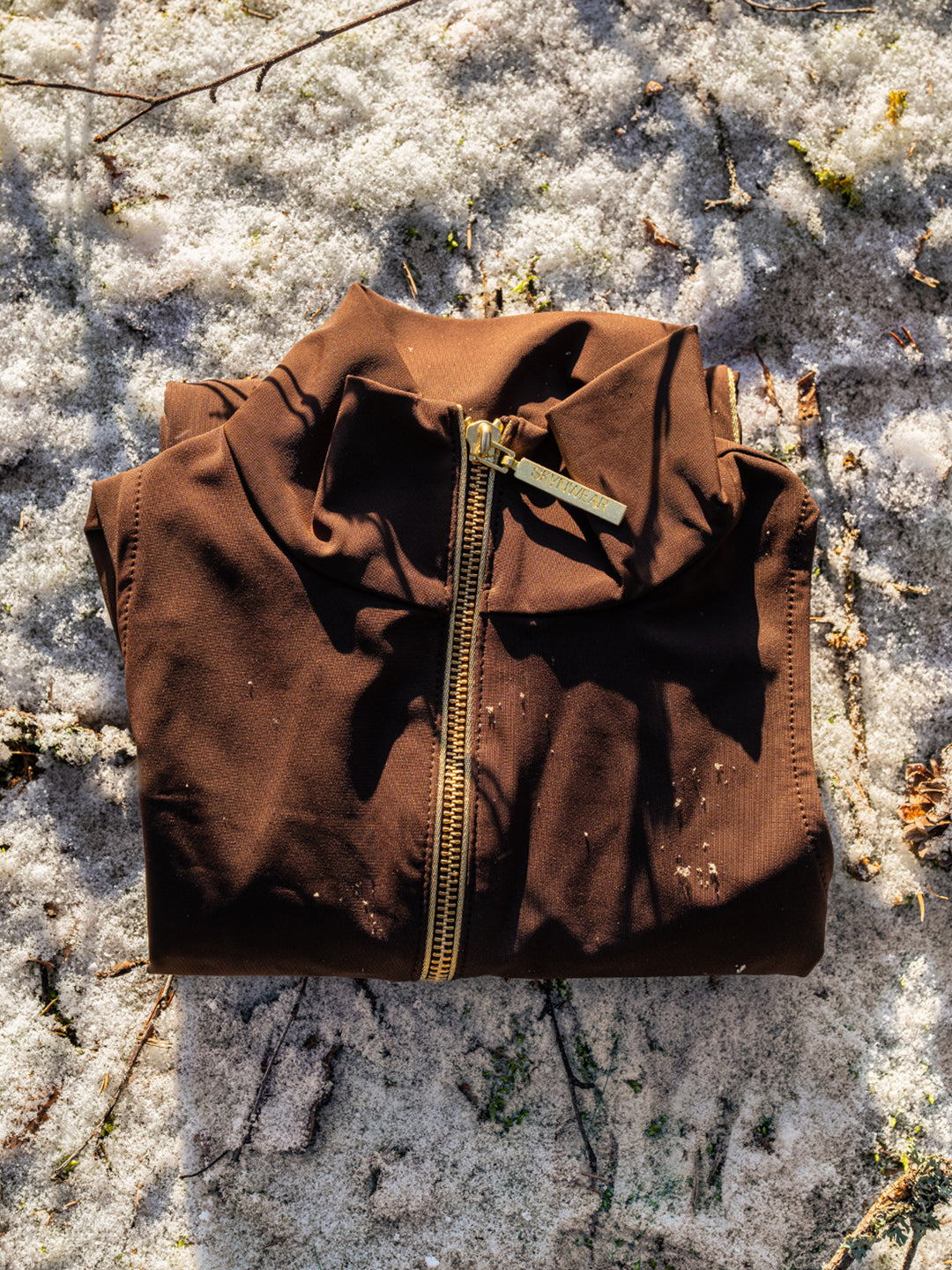
Skiing has always sat somewhere between performance and presence. The conditions are extreme and change by the hour, yet the slopes have a style of their own. What you wear has to answer to both.
This is not about piling on layers or chasing trends. It is about dressing with thought, so you stay warm, protected and comfortable, and look like yourself from the first lift to the last.
Dress for changing conditions
The mountain never stays the same for long. Temperature, altitude and exposure shift through the day, sometimes within an hour. A ski wardrobe starts with how it works:
- Insulation that keeps you warm without bulk
- Fabric that breathes and keeps your temperature steady
- An outer layer that keeps out wind and snow
But working well is no longer enough. Ski clothes are now expected to look right on the slope, on the lift and in the chalet, without giving anything up.

Why the ski suit is back
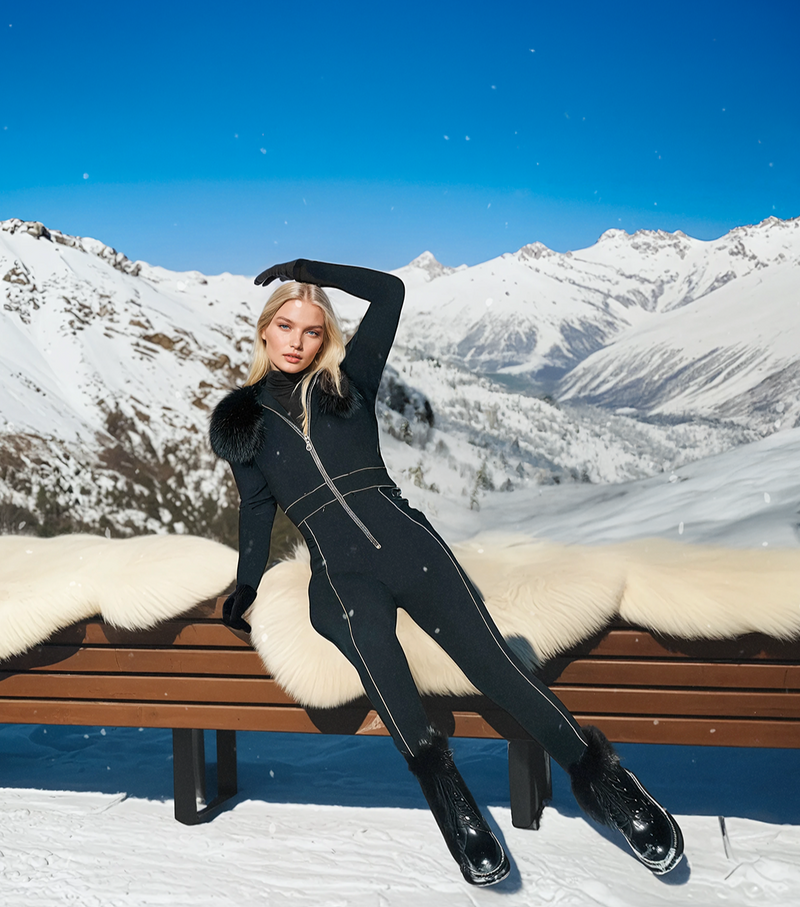
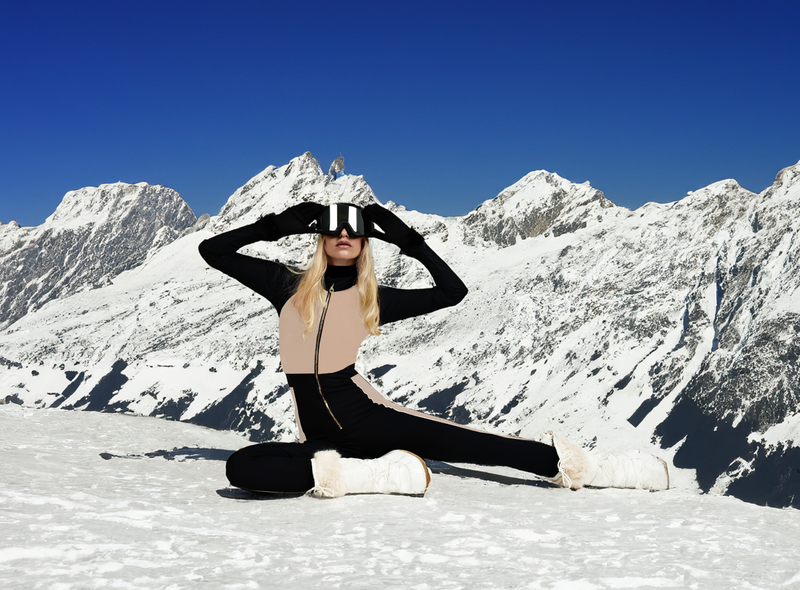
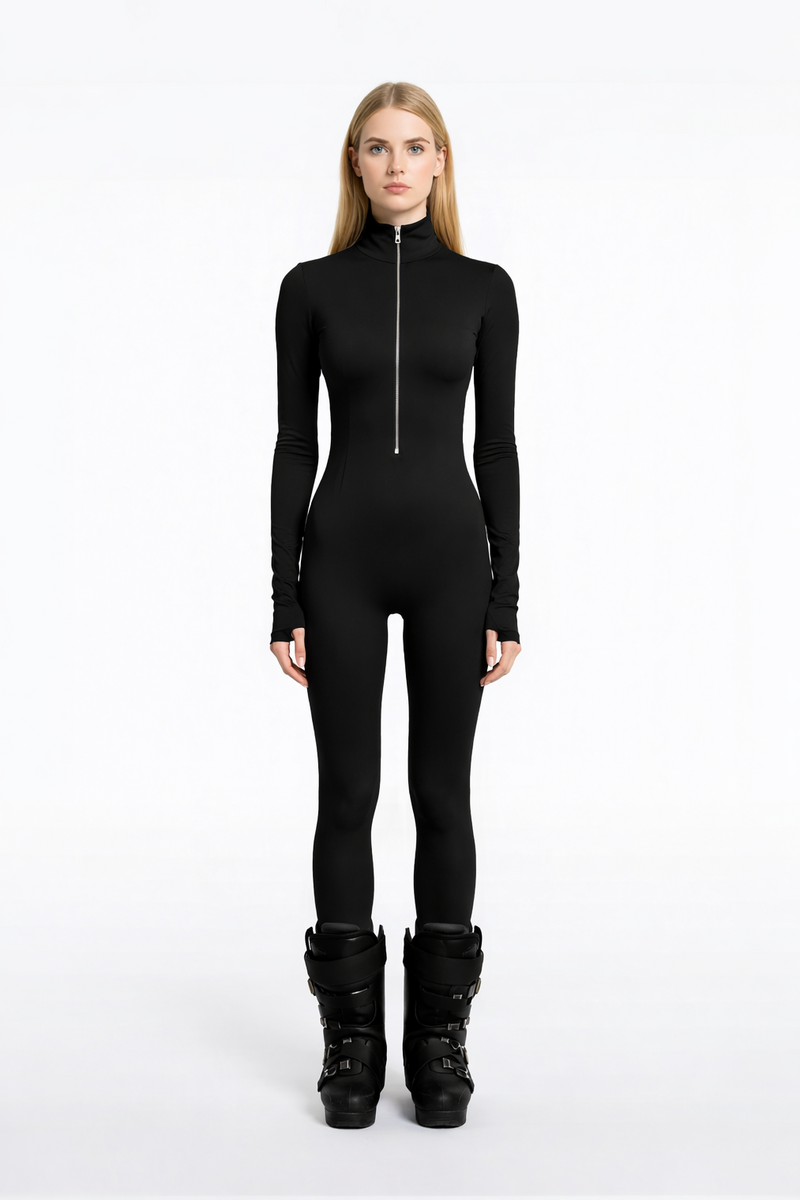
The one-piece ski suit has returned as one of the most considered choices on the mountain. A single, shaped piece gives you:
- Even warmth across the whole body
- A clean, unbroken silhouette
- Freedom to move, with no gap at the waist and no hems digging in
Where a jacket and trousers divide the body in two, a well-cut suit holds everything together. It moves easily between skiing, walking and sitting still.
Suit, or jacket and trousers?
The choice is usually framed as a practical one. In reality it is as much about shape.
Separates let you mix and layer in different ways, which can help in very changeable climates. A suit gives you a more deliberate line, especially when it is sculpted and carefully panelled, and it keeps the snow out when you fall.
A suit holds everything together: the warmth, the line and the look.


Fabric, fit and finish
The details are what separate ordinary ski wear from pieces you keep for years.
Fabric should feel substantial but never heavy. It should move with you and protect you at the same time: water-resistant, breathable and able to manage your temperature without spoiling the line.
Fit matters just as much. A sculpted shape, with careful construction at the waist, leg and shoulder, makes a suit more comfortable as well as more flattering. Zips, trims and panels should feel planned, never added on. Subtle lasts longer.
From slope to après
The day rarely ends at the bottom of the last run. Après is part of the rhythm, and what you wear should carry on without a change of outfit. Look for ski wear that:
- Keeps you warm once you stop moving
- Holds your essentials securely
- Stays comfortable long after the last lift
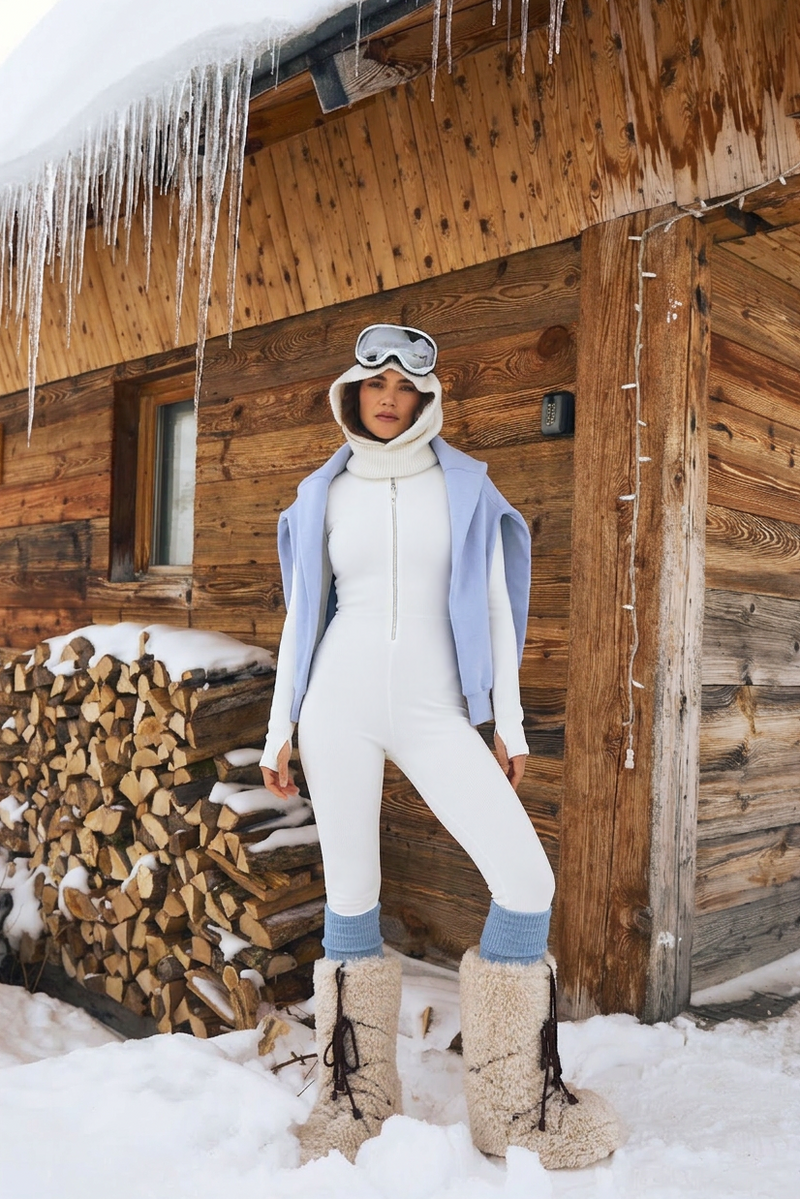
A well-fitted suit over a single good base layer does this naturally. There is no need to over-style it.

Buy less, choose well
Ski wear no longer has to choose between looking good and working hard. The most considered ski wardrobes share a few principles:
- Less is more. Solid colours and prints that will not date.
- Structure over layers. One good base layer instead of several that do little.
- Lasting over trend-led. Pieces you will still want to wear in five winters.
The short version
- Start with how it works: warmth, breathability, weather protection
- A one-piece suit gives warmth and a clean line
- Look for a sculpted fit and details that feel planned
- One good base layer underneath is enough
- Choose pieces that will last more than a season
For what goes underneath, read our guide to layering for skiing.
Shop the story