Journal · Snow · Guide
How to Layer for Skiing
Too cold on the lift, too warm on the descent. Three layers, each with one job, and how to get the balance right from first run to après.
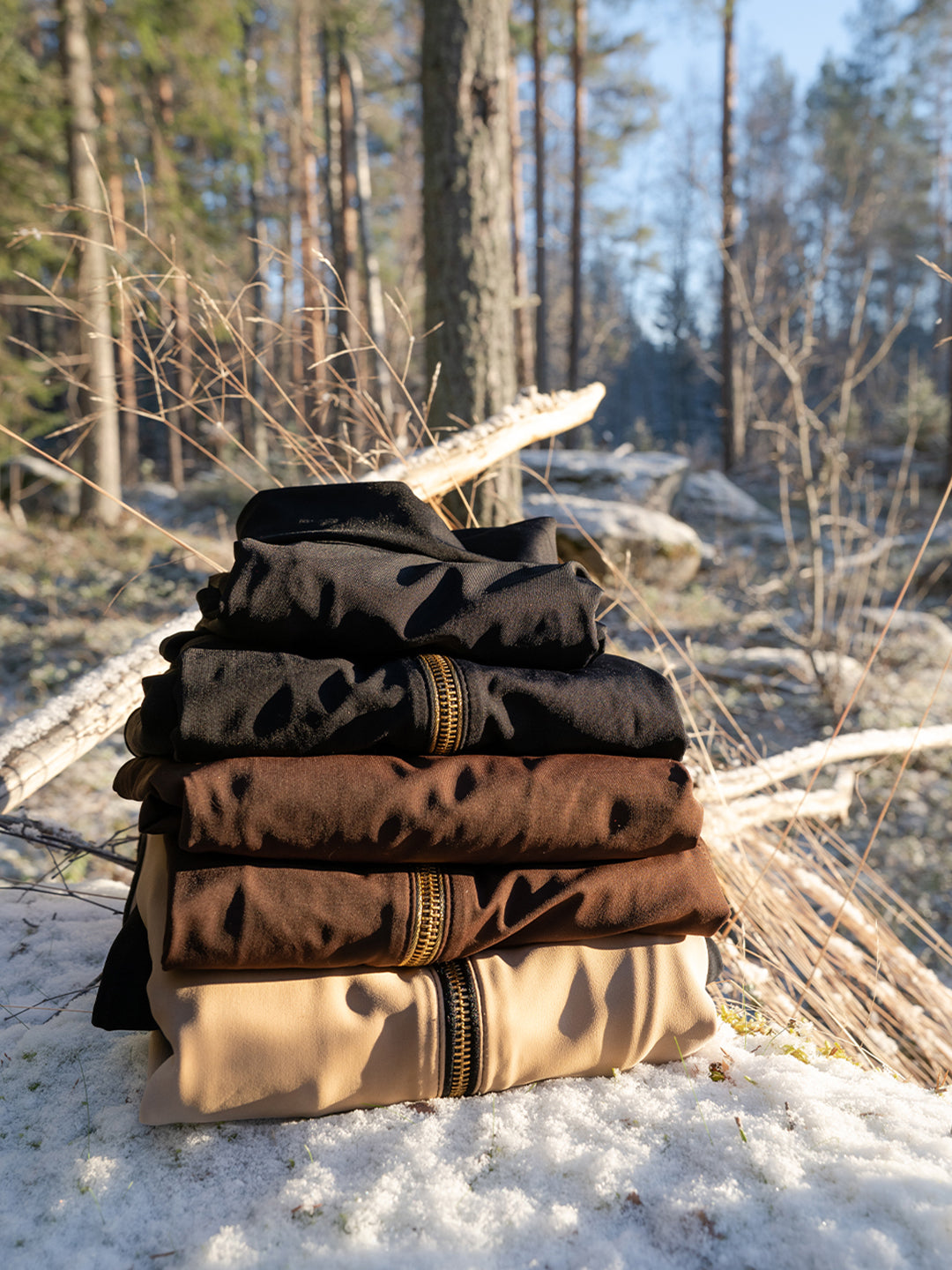
Shivering on the lift is a bad sign. Overheating on the way down is worse. Good ski layering is a question of balance: three layers, each with one job, that let you stay comfortable from the first run to the last drink on the terrace.
Three layers, three jobs
Every ski outfit that works follows the same order. The base layer moves moisture away from your skin. The mid-layer holds warmth. The outer layer keeps out the wind and snow. Get each one right and you will never need to peel off a jacket halfway down a run.
- Base moves moisture away from the skin
- Mid holds warmth, and comes off when the sun is out
- Outer keeps out wind, snow and the cold
The base layer
No one sees it until lunch, but it decides how the whole day feels. A good base layer draws sweat away from your skin, so you stay dry and avoid that damp chill when you step off the lift.
Choose a fine technical knit or merino, never cotton, which holds moisture against the skin and stays cold all day. It should sit close, like a second skin, but never feel tight.
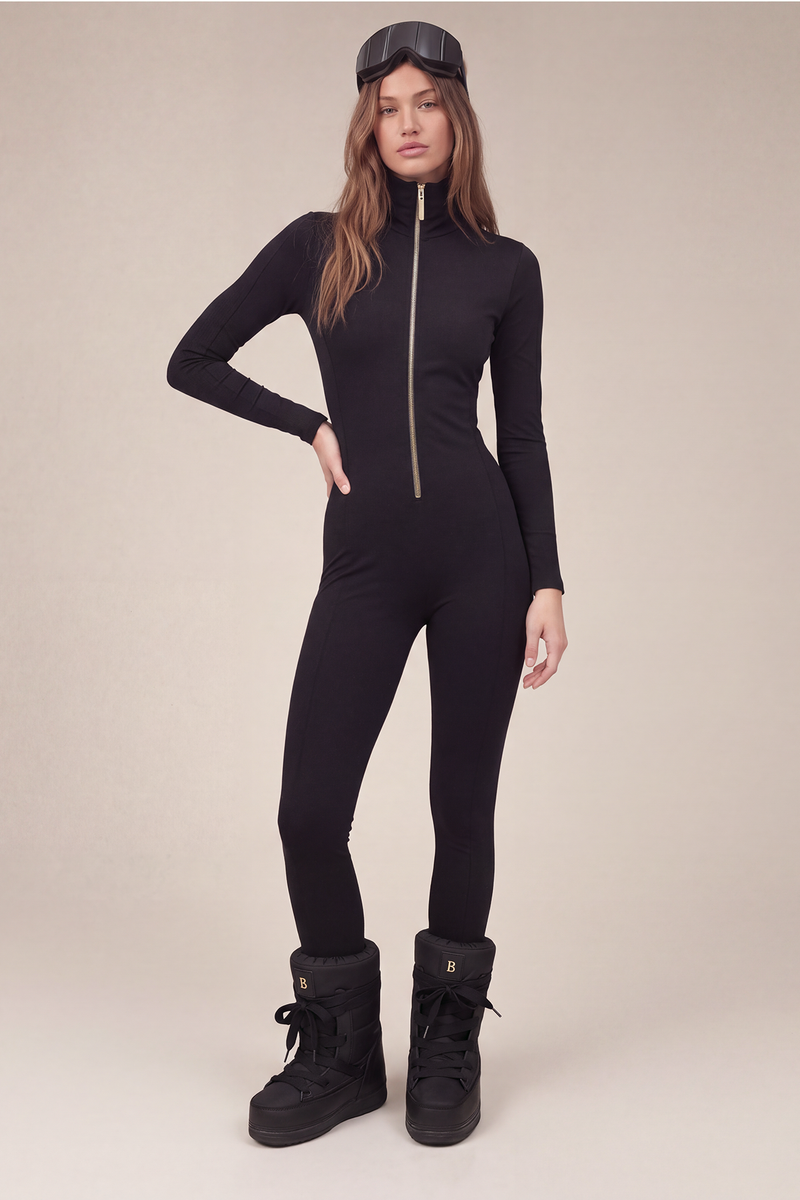
A one-piece base layer jumpsuit stays put from neck to ankle, with no gap at the waist and nothing rolling down. If you plan to take your snow suit down to your waist at lunch, choose a colour you are happy to be seen in. Black and chocolate go anywhere.


The mid-layer
The mid-layer is your warmth, and the one you add or remove as the day changes. Wear one:
- In December, January and February
- On afternoons in the shade, once the sun has gone behind the mountain
- Whenever the temperature is below freezing
A fitted merino knit, a fine fleece or a light down gilet all work. A packable down jacket is worth its place on icy days: it adds warmth without bulk, and folds into a bag when you no longer need it.
Warm, not wadded. A mid-layer should disappear under your suit.
The outer layer
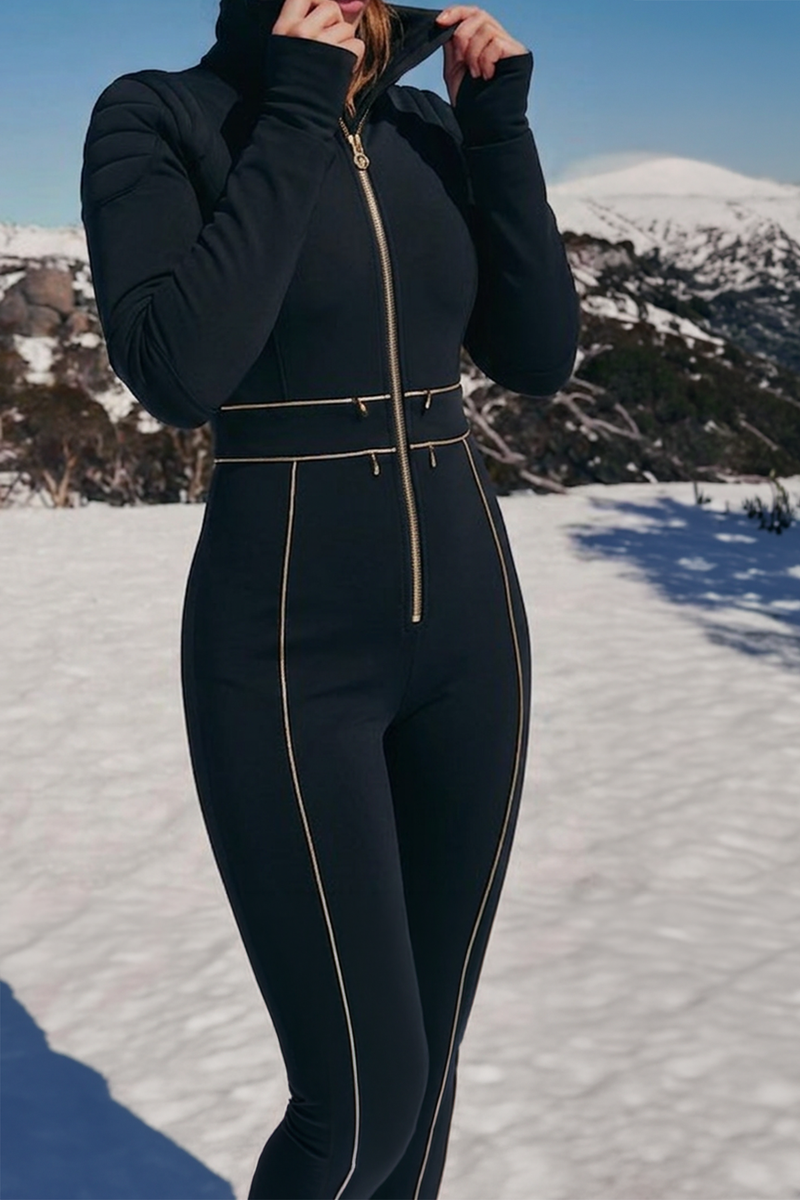
This is the piece everyone sees, and the one that keeps out the weather. Look for a shell that is waterproof, windproof and breathable, cut close enough to look sharp without restricting how you move.
A one-piece snow suit is the cleanest answer. There is no gap at the waist for snow to find on a fall, nothing riding up on the lift, and one clean line from collar to boot. Ours have zip-off sleeves, so the same suit works on a cold morning and a warm spring afternoon.

The details
The small things decide whether you stay comfortable all day.
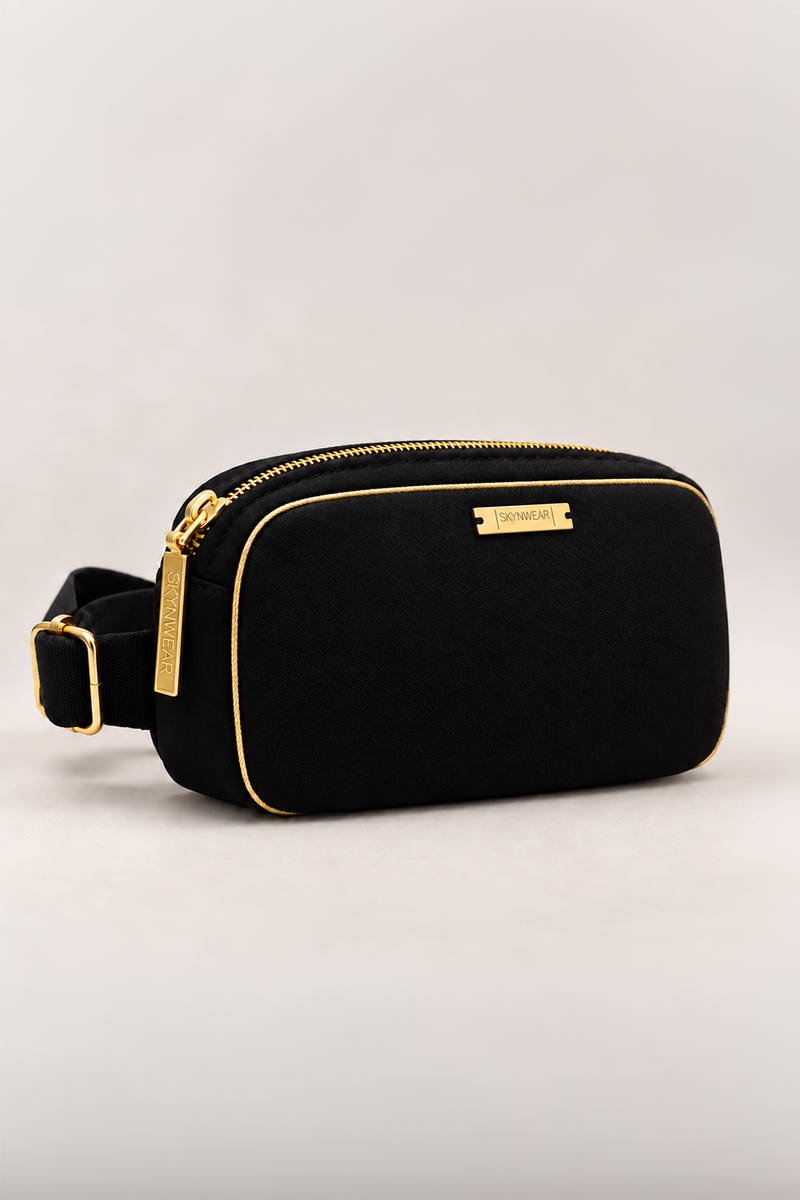
- A small bag for sun cream, phone, sunglasses and lip balm. A waist bag clips at the waist or across the body without getting in the way.
- One pair of merino ski socks, pulled up smooth. Never two pairs, and no wrinkles inside the boot.
- Gloves that stay dry and warm, ideally ones that work with a touchscreen.
- A neck warmer in merino, to keep the wind off your face without the bulk of a scarf.
- Goggles with a lens suited to the light, and a fine beanie or headband for under the helmet.

From slope to après
The real test of a ski outfit is how easily it moves from the mountain to the terrace. Unzip the suit, tie it at the waist or take off the sleeves, and let the base layer and a good knit carry you through the afternoon. Swap ski boots for warm, fur-lined boots, add sunglasses and a soft wrap, and you are dressed for the evening without going back to the chalet.
The short version
- Base moves moisture, mid holds warmth, outer keeps out the weather
- Never cotton next to the skin
- Add a mid-layer in deep winter, take it off in spring
- A one-piece suit keeps the snow out and the line clean
- Keep the essentials in a small bag, not in your pockets
Shop the story